
Cockshutt Letter Book Project: Preserving a Record of Early Industrial Commerce
The Cockshutt Letter Book Project is a pilot archival initiative of the Canadian Industrial Heritage Centre (CIHC) focused on preserving, transcribing, and interpreting one of the earliest surviving business letterbooks associated with the Cockshutt firm. This letterbook, dating primarily from 1854, contains handwritten copies of outgoing correspondence, financial records, and internal notes that document the daily operations of a mid-nineteenth-century merchant enterprise based in Brantford, Ontario.
The Cockshutt Letter Books form part of the collection of the Farringdon Independent Church and are presented through an ongoing partnership between the Farringdon Independent Church and the Canadian Industrial Heritage Centre. The Cockshutt Letter Book Project has been made possible through the generous support of the Stedman Foundation and private contributions from David Pease. This support enables the preservation, transcription, and public accessibility of these important historical records.
What Is a Letterbook?
Before the use of typewriters or digital records, businesses maintained letterbooks to keep copies of correspondence sent to suppliers, freight agents, financial institutions, and customers. These bound volumes functioned as official records, allowing firms to track orders, confirm payments, resolve disputes, and maintain continuity in communication. The Cockshutt letterbook reflects this practice, preserving letters written under the authority of Ignatius Cockshutt and often signed by clerks on his behalf.
These records were essential tools in maintaining accountability. By documenting shipments, financial transactions, and agreements, letterbooks provided evidence in cases of delay, loss, or disagreement.
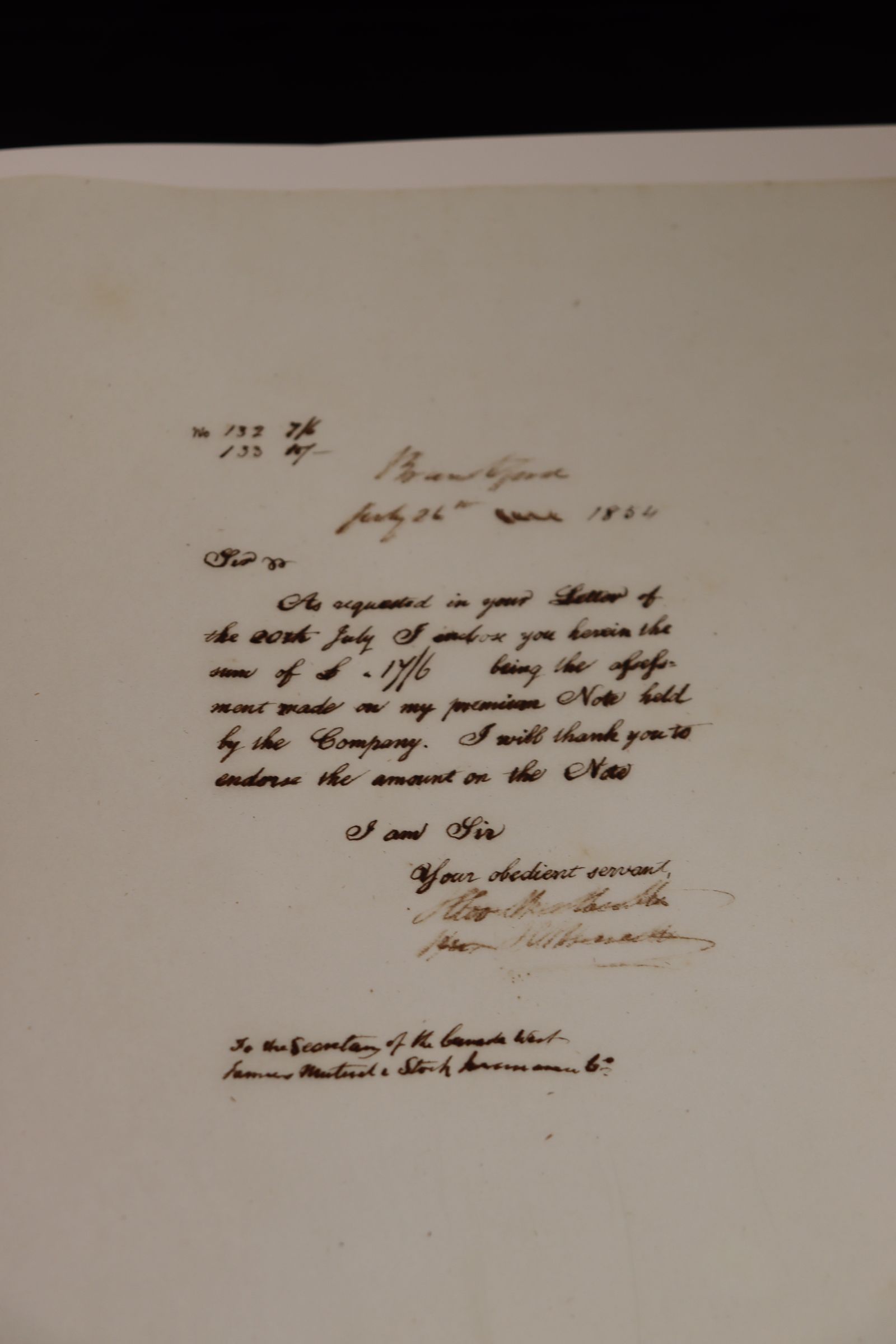
Image of a Page from the Original Letter Book
Insights Into a Nineteenth-Century Supply Network
The Cockshutt letterbook offers a detailed view into the complex supply chains that supported commerce in Canada West (now Ontario). The correspondence reveals the firm’s reliance on expanding railway networks, including the Grand Trunk Railway and Great Western Railway, as well as lake and regional transport routes.
Many letters address missing or delayed shipments, such as raisins, almonds, candles, and other goods. Cockshutt and his clerks routinely contacted freight agents, suppliers, and financial intermediaries to trace goods, confirm deliveries, and resolve discrepancies. These communications illustrate both the opportunities and challenges created by emerging transportation infrastructure.
A Diverse Merchant Operation
The letterbook demonstrates that Cockshutt operated as a diversified merchant rather than specializing in a single product. The firm handled a wide range of goods, including: • Imported food staples such as sugar, raisins, and almonds. • Household and retail goods such as candles and soap • Industrial and hardware materials such as steel, glass, and tools • Commercial supplies used in manufacturing and trade
This diversity reflects the role of regional merchants as central intermediaries connecting suppliers, transportation systems, and local markets.
Financial Practices and Record-Keeping
The letters also document the financial systems that supported nineteenth-century commerce. Transactions were conducted using drafts, remittances, and credit arrangements rather than immediate cash payment. Cockshutt frequently deposited funds with banks, issued drafts to suppliers, and requested receipts to confirm transactions.
These practices demonstrate how businesses managed financial risk and maintained careful records to ensure accuracy and accountability. The letterbook provides valuable insight into the financial infrastructure that supported industrial and commercial growth.
The Role of Clerks and Office Systems
The repeated notation “per J.C. Bennett” and similar signatures indicate that clerks played an essential role in managing correspondence and maintaining records. These clerks drafted letters, recorded transactions, and ensured continuity in communication when Cockshutt was absent.
This reflects the emergence of organized office systems in growing commercial enterprises, where administrative staff supported expanding business operations.
Historical Significance
The Cockshutt letterbook represents more than a collection of business records. It provides a microhistorical view of commerce, transportation, and communication during a period of economic and industrial expansion. Through these letters, researchers can reconstruct trade networks, understand logistical challenges, and examine the early organizational structure of a firm that would later become associated with industrial manufacturing.
The project’s pilot phase focuses on preserving and transcribing this material to improve accessibility for researchers, students, and the public. By making these records available, the Canadian Industrial Heritage Centre contributes to a deeper understanding of Canada’s commercial and industrial past.
Looking Forward
As the Cockshutt Letter Book Project progresses, it will serve as a model for future archival initiatives. By preserving primary source materials and making them accessible, the project helps ensure that the documentary record of Canada’s industrial heritage remains available for future generations.
For more information regarding this ongoing project or to view the letter book pages, click the button below.